ULTRAVAC keeps suction at every terminal unit of the hospital, fully automatically. Ultra Controlo designs and builds it in Portugal on Elmo Rietschle pumps, alongside anaesthetic gas scavenging and dental suction.
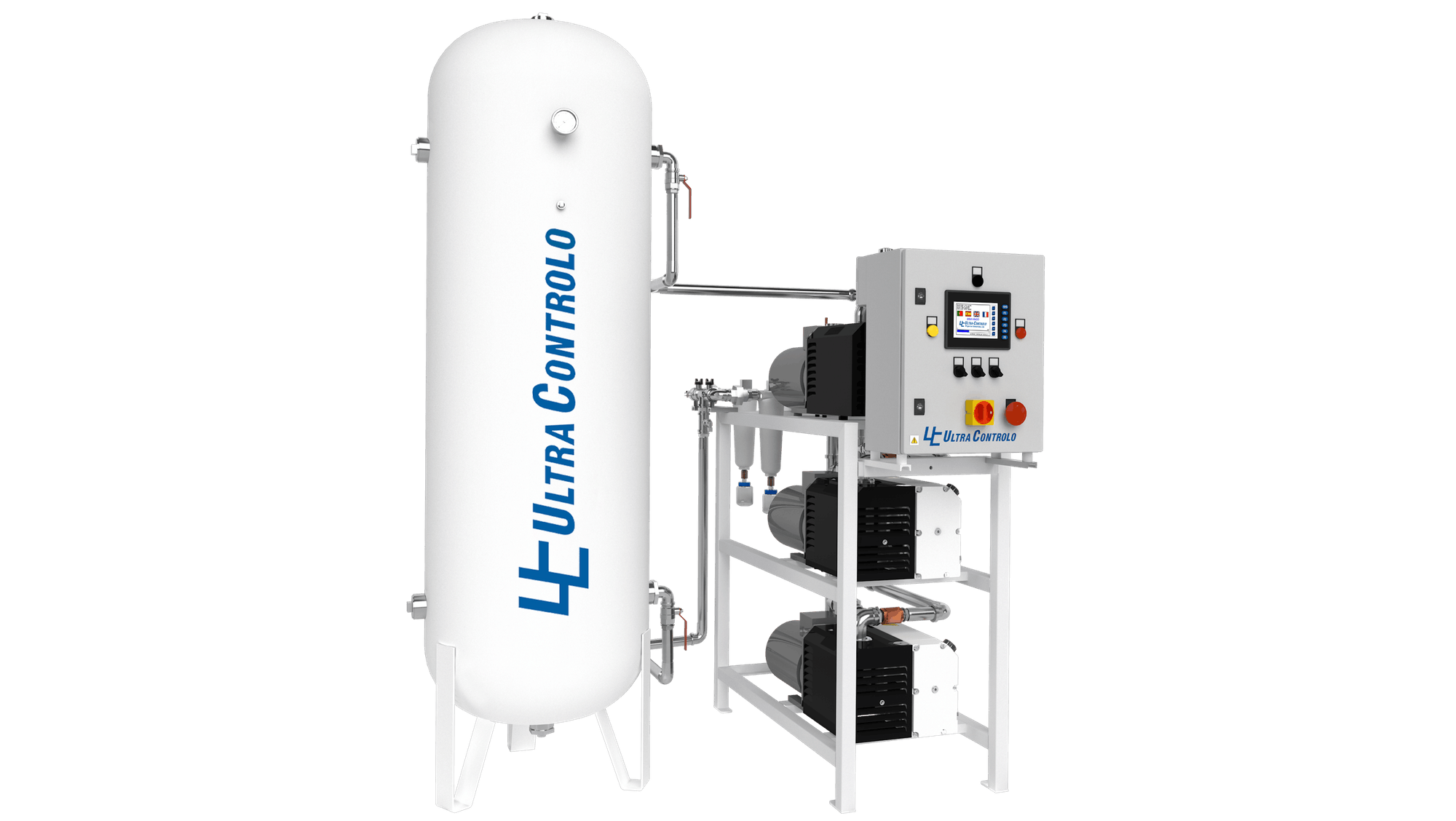 Vacuum vessel
Bacterial filters
QuVAC control
Elmo Rietschle pumps
Vacuum vessel
Bacterial filters
QuVAC control
Elmo Rietschle pumps
How it works
A vacuum plant works the other way round. It pulls air from the hospital, stops liquids and bacteria on the way, and sends the rest outside.
Suction.Clinicians draw suction from the terminal units by each bed, from the operating room to the ward, whenever they need it.
Filter.A transparent liquid separator catches liquids before they reach two bacterial filters, which hold back bacteria. Gauges show the pressure drop across each filter.
Hold.A vacuum vessel of 24 to 6,000 litres keeps a reserve between the network and the pumps, at a normal vacuum of −0.85 bar.
Pump.One to twelve Elmo Rietschle pumps, of 3 to 1,600 m³/h each, run automatically. The QuVAC touch-screen controller rotates them and starts them progressively.
Exhaust.The pumps discharge through dedicated exhaust pipes, and a translucent trap collects condensate from the exhaust.
The system
Clinical vacuum, anaesthetic gas scavenging and dental suction, each built for its job. ULTRAVAC and ULTRASEG plants are pre-assembled and tested in our factory in Portugal.
Central plants for the hospital vacuum network.
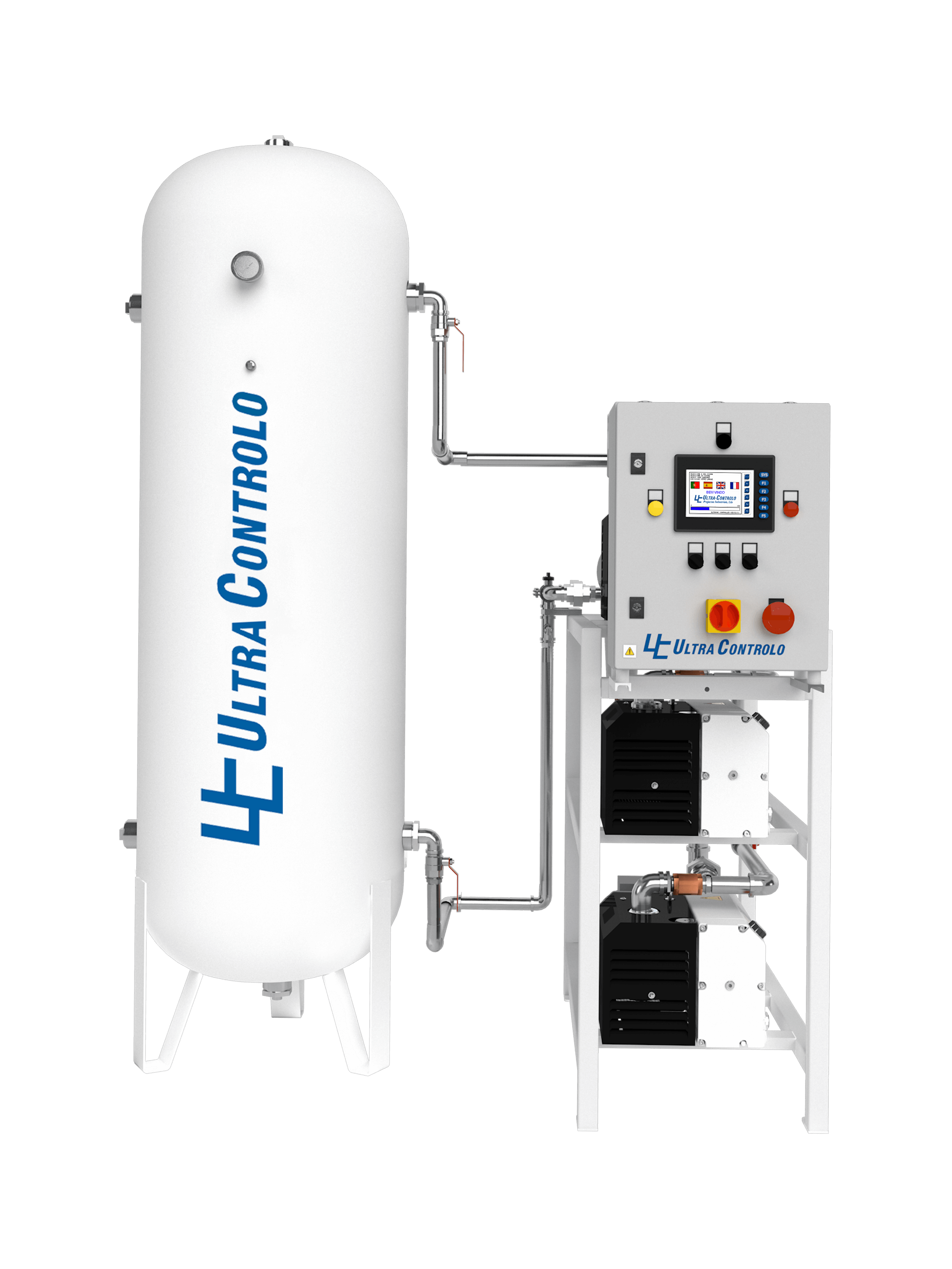
Fully automatic medical vacuum plant with 1 to 12 Elmo Rietschle pumps, two bacterial filters with a liquid separator, and analogue or QuVAC touch-screen control. Pumps can be oil-lubricated vane, dry-running vane, liquid ring, side channel or dry-running claw.
View ULTRAVAC
Oil-free, contactless claw pumps. At variable speed they use around 40% less energy, with one oil change every 20,000 hours.
View ULTRAVAC CLPScavenging for the operating room, at a much lower suction level.
Central suction for dental clinics, and vacuum in critical areas if a network fails.

Central wet suction for dental clinics and schools, from one to several hundred chairs. The first, for 64 chairs at the Faculty of Dental Medicine of Lisbon, was installed in 1992.
View ULTRAVAC DENTAL
Emergency cabinet for critical areas, with a 40 m³/h vacuum pump and oxygen and medical air cylinders.
View ULTRAGECWhy ULTRAVAC
Installed
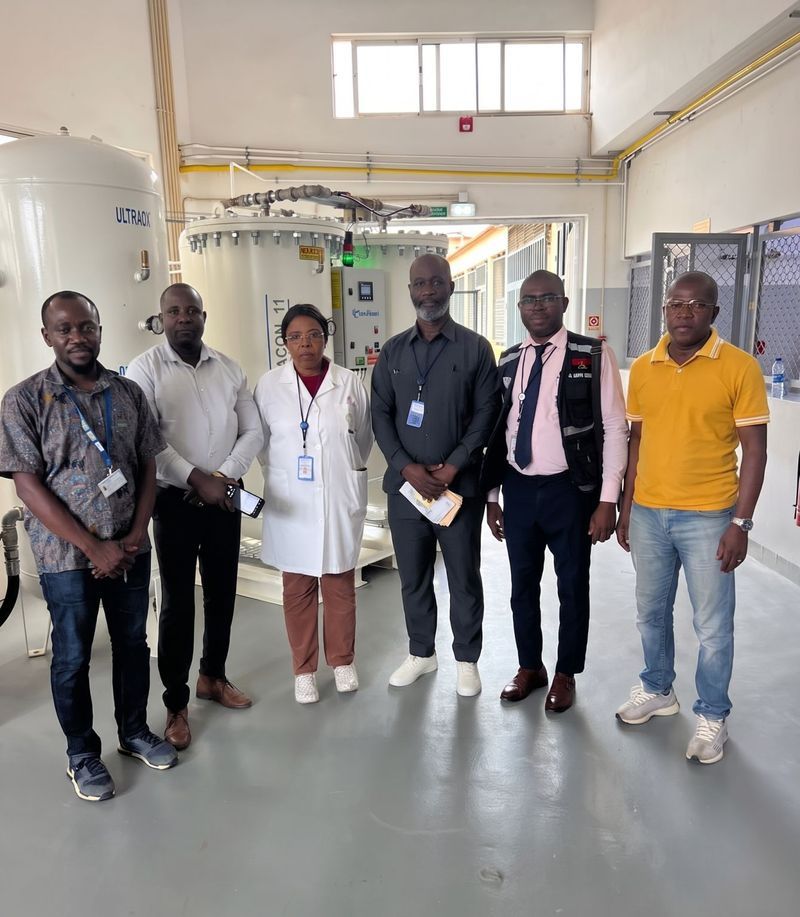
This year, medical vacuum plants were handed over with complete medical gas systems at hospitals across Angola.
UltraCare
On medium and large plants, our factory technicians supervise installation, start-up and staff training, and UltraCare keeps the plant running for the years after.
The central plant and pipeline that provide continuous suction for clinical use across the hospital. ULTRAVAC plants run fully automatically with 1 to 12 Elmo Rietschle vacuum pumps of 3 to 1,600 m³/h each, at a normal operating vacuum of −0.85 bar, with two bacterial filters and a liquid separator. Read more
Anaesthetic gas scavenging system: it captures waste anaesthetic gases from the patient’s breathing circuit and removes them from the operating room, protecting staff from long-term exposure. Ultra Controlo’s AGSS is ULTRASEG, with side channel pumps of 50 to 300 m³/h each at −0.2 bar. Read more
No. Medical vacuum provides clinical suction at a stronger vacuum, while an AGSS removes anaesthetic gases at a much lower suction level, under its own standard, EN ISO 7396-2. ULTRAVAC works at −0.85 bar and ULTRASEG at −0.2 bar. Read more
Oil-lubricated vane, dry-running vane, liquid ring, side channel and dry-running claw pumps. ULTRAVAC CLP uses oil-free claw pumps at variable speed, which use around 40% less energy. Read more
In critical areas, an ULTRAGEC emergency cabinet holds a 40 m³/h vacuum pump alongside oxygen and medical air cylinders, with a monitor that watches primary and secondary network pressures. Read more